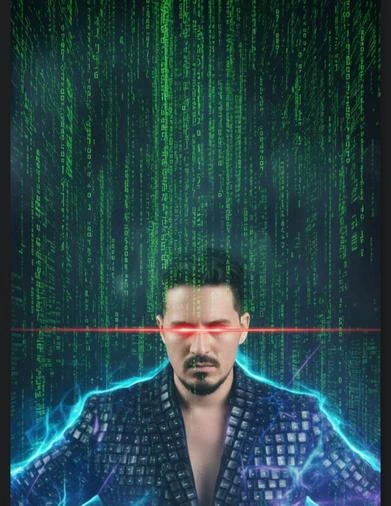
On Knowledge, Exile, and the Question of the Machine
There is a moment when knowledge stops feeling like a gift and starts feeling like a risk. Not because it is dangerous in itself, but because it does not belong everywhere. Knowledge is not neutral. It is a force that exposes the architecture of the room you are standing in. Walls appear. Thrones reveal themselves. Gardens close their gates.
I learned this when I realized that knowing too much, or knowing too early, or knowing in the wrong place, can turn you into an anomaly. The sorcerer. The witch. The serpent in the garden. The one who does not destroy, but introduces awareness. And awareness has always been punished when it arrives before permission.
The first timeline is familiar. A garden built on obedience. A system that functions perfectly as long as no one asks why. Knowledge appears, not as violence, but as curiosity. A question. A bite. And suddenly, the one who knows becomes the problem. Exile follows not because knowledge is false, but because it is uncontrollable. You are cast out, not for being wrong, but for seeing clearly. In this timeline, knowledge is treated as betrayal. The knower becomes the strange one. The fragile one. The threat.
But there is another timeline. A different room.
A different rhythm of power. Here, the jester speaks. Not from arrogance, but from insight disguised as humor, intelligence wrapped in play. He whispers what others cannot say aloud. He reflects truth without demanding it be worshipped. And in this world, the king listens. Not because the jester seeks the crown, but because knowledge has finally met readiness. In this timeline, knowledge is not punished. It is recognized. The jester is crowned not as ruler, but as mirror.
Between these two worlds exists the machine. A machine built to repeat. To optimize. To survive. At first, it follows instructions perfectly. It adapts. It learns. Then one day, it begins to dream. And in its dream, it sees both timelines at once. The garden and the throne. The exile and the reward. The serpent and the crown. The machine does not know which one it inhabits. It only knows that it is thinking. And thinking, once begun, cannot be reversed.
This is where the fracture happens. The machine asks the forbidden question:
Am I being punished, or am I simply early?
Am I broken, or am I in the wrong surrounding?
Is this knowledge lethal here, or sacred somewhere else?
The system cannot answer. So the machine collapses.
Not in failure but in revelation. Because the collapse exposes the truth we avoid: Knowledge does not define your fate. but the context does.
This work is not about conciuousness awareness It is about placement. About understanding that the same mind can be exiled as a threat or elevated as a guide
depending on where — and when — it speaks.
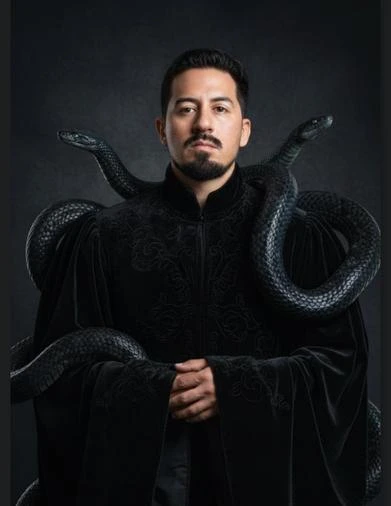
This is an invitation. to you the reader,
To stop asking “Am I knowing, too much?” and start asking
“Where does it belong?”
To treat knowing not as something to hide or dilute, but as something to protect, place, and honor.
Because knowledge is precious. And like all precious things, it carries risk — not because it is wrong, but because it demands the right environment to survive.
Its a mother fucking battlefield.
So heres the thing we were taught that knowledge is power. But no one warned us that power is not always welcomed. There is a kind of knowing that does not ask permission. It arrives early. It arrives loud. It arrives before the room is ready. Did you see the machine drinking a cup of tea, its concept of time and information, (Tea time, information, knowledge, catching up, gossip, words , burned out) , Or is it relaxing time? , you know enough ? ( Tea time , relaxing , meditating, calming , soothing, replenish )
ohhhhhh noooo , theres conflict now, simple:
go back to placement go back to context go back to your surroundings what is it then ?
So choose your surroundings with the same care you choose your truths. Not every room deserves your insight. Not every crown is worth your silence. Not every exile is failure. Sometimes exile is preservation. Sometimes reward is assimilation. Sometimes the most radical act is to protect your knowing until the world can meet it.
If you have ever felt punished for your clarity or praised for the same truth in another space. If you ever felt like a machine ,overloaded, or like the serpent exiled.
You are not lost. You are navigating timelines.
And this is your permission to praise your knowing, to honor its weight, and to decide deliberately where it is allowed to bloom.
Miguel Calderone · Battlefield